One prompt, a real landing page, and a staging preview to approve
Agencies and clients can describe a landing page and get a staging preview to review — not a paste-into-Elementor draft. Oppify’s outbound page is the proof.
Most “AI built my landing page” demos stop at a pretty mockup.
Someone pastes copy into a chat. The model returns HTML. Then a human spends the afternoon shoehorning that output into Elementor, wrestling spacing, and hoping production does not look different from the chat window.
That is not a delivery system. That is a faster first draft with the same review problem you already had.
What Oppify actually needed
Oppify Consulting needed a full outbound landing page — not a hero tweak.
The page had to carry their offer end to end: headline, proof stats, pricing comparison, social proof, testimonial, and a clear “Schedule a call” path. The hero line they wanted was specific:
“A 5-person outbound team for less than one in-house BDR.”
Supporting copy, CTAs, and on-page claims like 85% saved vs. in-house and 81% more meetings were part of Oppify’s own landing-page messaging — the content they asked for on the page, not Backbone performance metrics.
The difference is the review loop
Backbone did not dump a static HTML file and walk away.
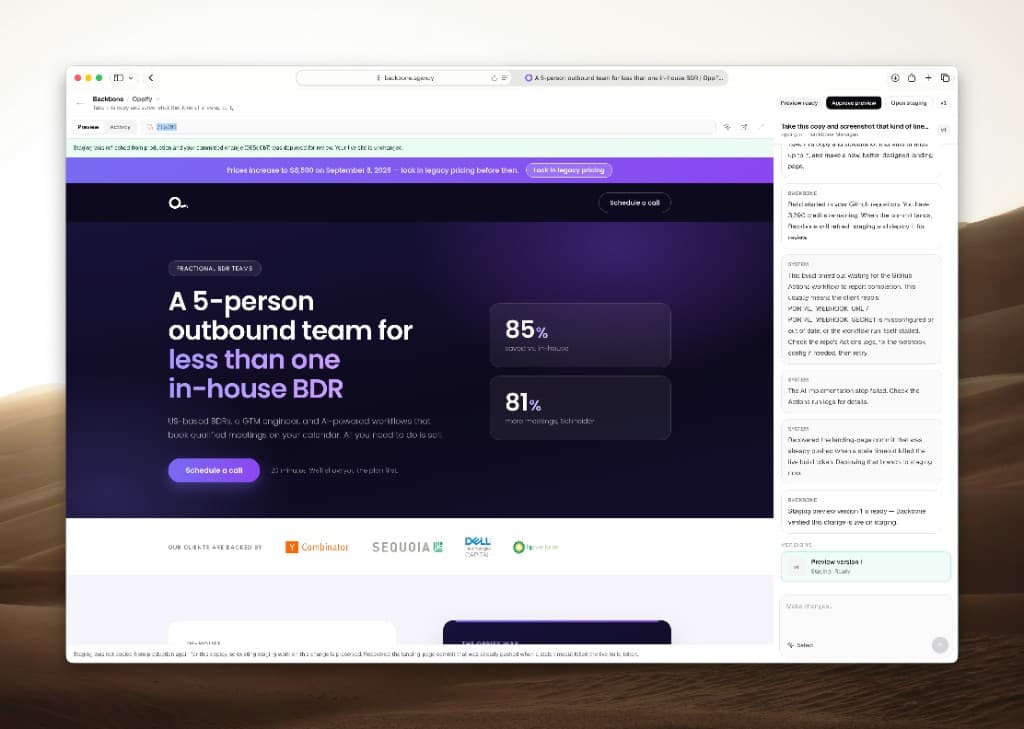
The build landed as a staging preview of the real site. In the UI you can see the loop that matters for agencies and clients:
- Describe the page in plain language
- Backbone implements against the live WordPress site
- Staging refreshes and deploys a reviewable preview
- A human hits Approve preview before anything touches production
That is the same preview → approve → publish path agencies should demand for any production-sensitive change. The live site stays unchanged until someone deliberately publishes.
What the finished page looks like
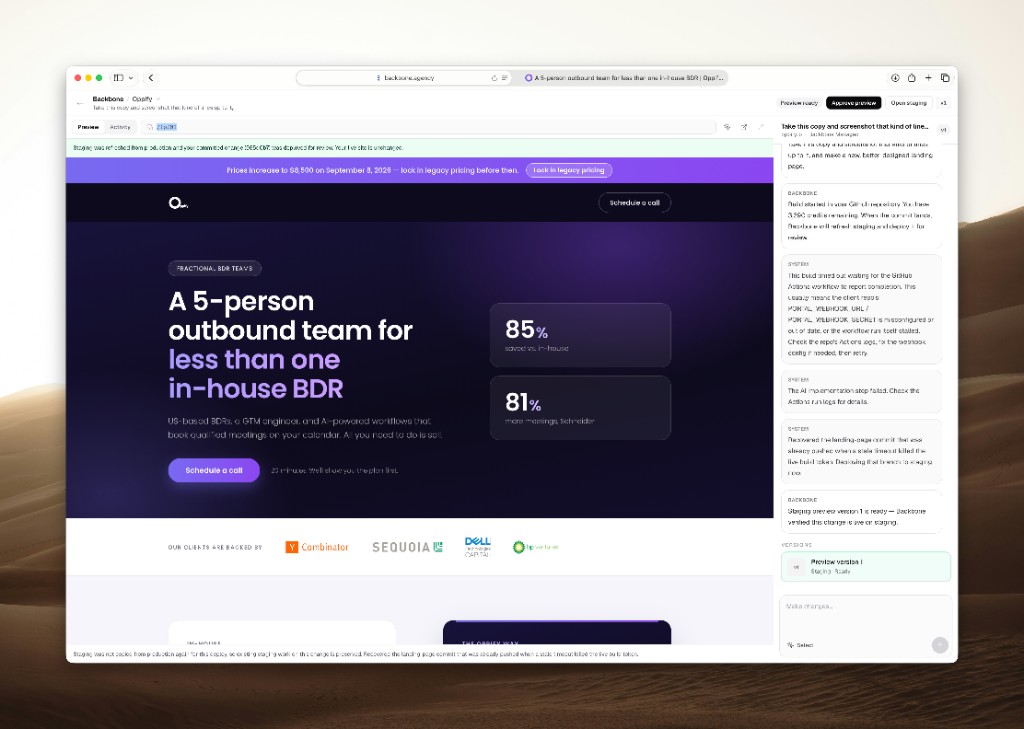
The result is a complete landing page, not a half-built section:
- Announcement bar and sticky CTA
- Dark hero with the outbound offer and proof cards
- “Our clients are backed by” logo strip
- In-house vs Oppify pricing comparison
- Testimonial and closing CTA
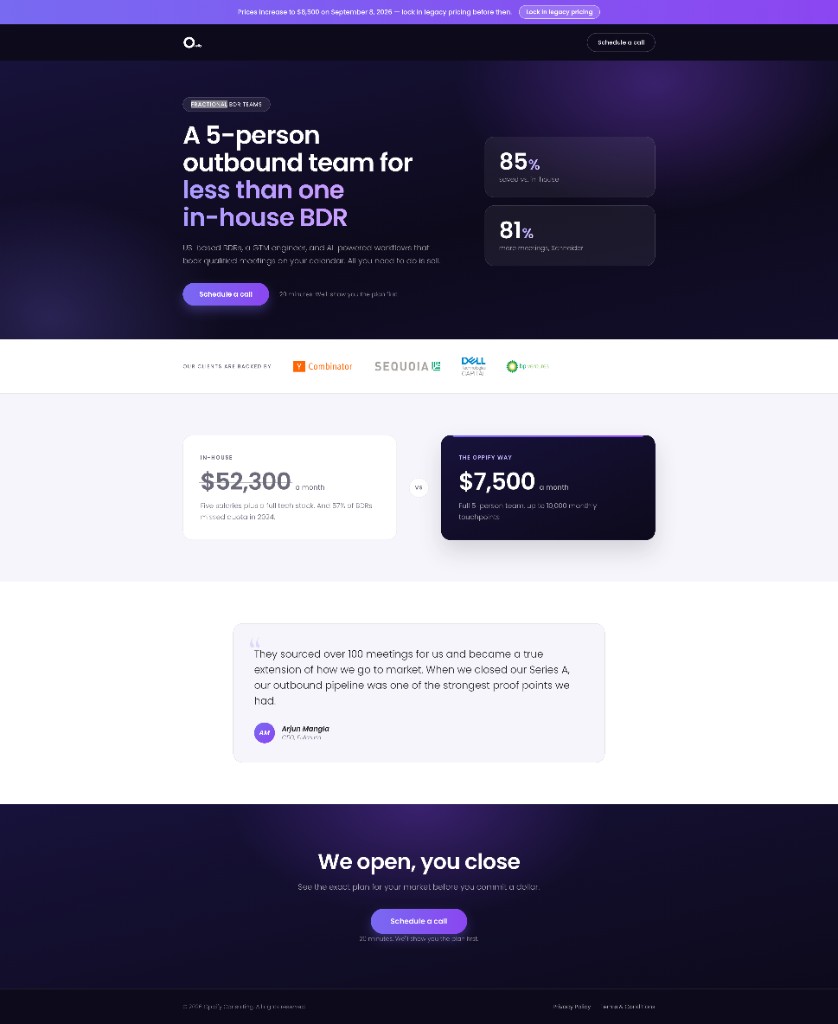
You can scroll it like a real site because it is a real staging deploy — not a Figma export or a chat screenshot of invented markup.
Why agencies should care
Landing pages are where margin dies quietly.
A client says “we need a page for this offer.” Someone spends a day in the page builder. Feedback arrives as Slack screenshots. Round two breaks mobile. Round three ships on Friday because the campaign starts Monday.
A one-prompt build only helps if the output is reviewable on a faithful copy of the site. Otherwise you traded typing for QA debt.
The useful product promise is narrower and sharper:
- Client or AM describes the page
- You get a staging URL that matches production templates and plugins
- Approve before publish
- Iterate with another prompt if the hero needs tightening
That is how you sell speed without selling a production gamble.
Soft next step
If your agency still builds landing pages by pasting AI output into Elementor, the bottleneck is not writing copy. It is the review loop.
Start a free agency trial or see how safe AI WordPress edits keep a human in the approval seat.
Ready to try the review loop on a real site?
Start a free agency trial, or go back to the blog index.