How WordPress agencies handle client change requests without adding headcount
The "update this section" queue is where agency margin disappears. Here is a safer workflow than tickets, Friday night deploys, or letting AI publish live.
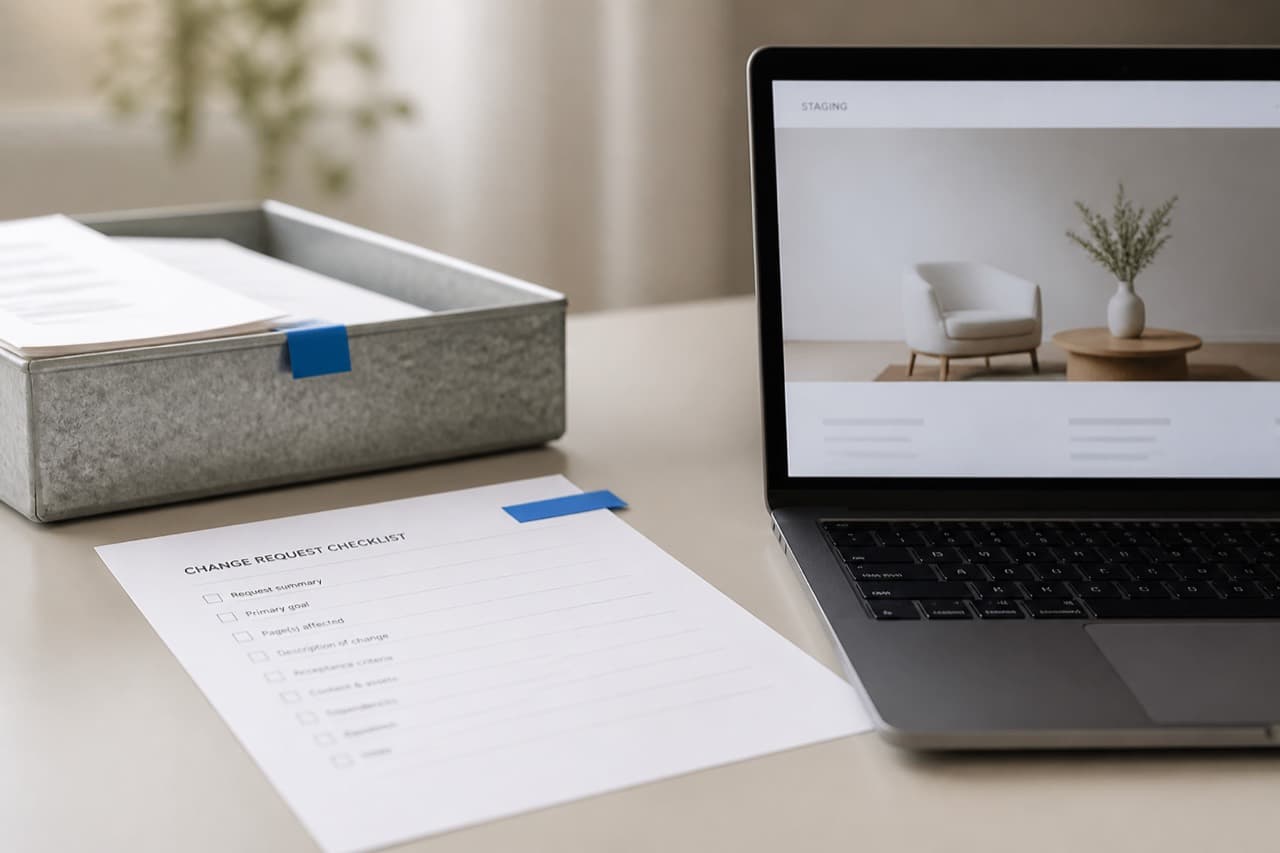
Most WordPress agencies do not lose money on new builds. They lose it on the work that arrives after launch: swap this hero image, add a landing page, fix the mobile layout, update pricing, "can this go live before Monday?"
That queue feels like service. It is actually the product. If you cannot turn those requests around quickly, clients start to believe they hired a ticket system, not a partner.
What clients are actually buying
Clients are not buying a CMS, a plugin stack, or another round of "we will take a look." They are buying outcomes:
- A site that can change as the business changes
- Confidence that a copy tweak will not take the homepage down
- A partner who can say yes without adding a week to the calendar
If your process is "open a ticket, wait for a developer, hope staging matches production," you are selling delay. Competitors with a faster loop will take the retainer.
The three ways agencies get stuck
1. Everything is a custom job. A trained developer opens production, edits a template, and deploys. Quality can be high. Throughput is not. One person becomes the bottleneck for twenty sites.
2. Clients get wp-admin. That clears your queue and creates a new one: broken layouts, plugin conflicts, and "who changed this?" You become the cleanup crew for work you did not price.
3. Unreviewed AI. A chatbot rewrites a page and publishes it. That is fast until it ships the wrong offer, the wrong brand voice, or a layout that collapses on mobile. Speed without a preview is just a faster way to create an emergency.
None of those options help you take on more sites without hiring.
A better loop: describe, preview, approve
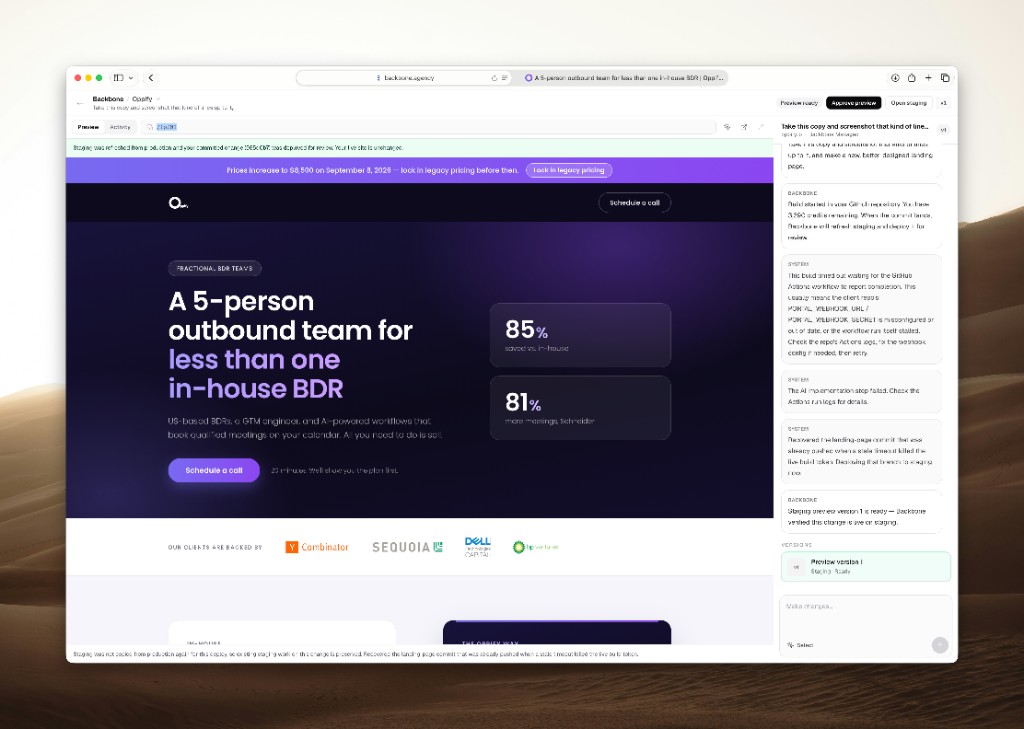
The agencies that scale retainers treat every change like a pull request for the website:
- The client describes the outcome in plain language.
- A preview is built on a copy of the live site, not on production.
- The agency reviews the plan and the preview.
- Nothing publishes until someone accountable approves it.
- If the result is wrong, you roll back to the last good version.
That is the difference between "AI touched my site" and "we shipped a reviewed change." The first is a liability. The second is a product you can white-label.
What this does to the economics
Take a mid-sized agency with 15 to 40 WordPress retainers and a thin web team. The constraint is not demand. It is review time.
If a typical change request costs an hour of senior attention, ten requests a week is a hire you cannot quite justify and cannot quite avoid. If the same request becomes a 10-minute review of a preview, you can keep the retainer, raise capacity, and stop treating Friday deploys as a personality trait.
That is also how you charge more. Clients will pay for speed and safety. They will not pay a premium for a longer ticket queue.
Who this is for
This workflow is built for agencies and operators who already manage existing WordPress sites — not for teams that want to rebuild every client on a new stack.
It works best when the site has a real content architecture: themes, templates, blocks, and structured data you can reason about. Page-builder sites with opaque layout blobs are harder. That is a compatibility fact, not a sales line. Be honest about it in the audit, then either restructure the site or keep those clients on a human-only path.
What to do this week
Pick five recurring request types from the last quarter. For each one, write the outcome the client wanted in one sentence. Then ask:
- Could a junior teammate review a preview of this in ten minutes?
- Would you let the client see that preview before you publish?
- If it shipped wrong, could you roll it back without a restore drama?
If the answer is no, the problem is not "we need more AI." The problem is that production is still the only place work becomes real.
Backbone is the product we built for that loop: the client describes the change, you get a safe preview, and nothing goes live until you approve it. If you manage a portfolio of WordPress sites and the request queue is the thing that keeps you from growing, start a free agency trial or see how the workflow works.
Ready to try the review loop on a real site?
Start a free agency trial, or go back to the blog index.